.2609281401421.png)
You are not imagining it: those itchy bites on a cool October evening feel unfair. After a brutal Central Texas summer, most of us expect mosquitoes to disappear as soon as the first cold front comes through, yet we are still swatting them on the porch and in the yard.
In Austin, that expectation just does not match reality. Austin Public Health defines mosquito season as May through November, and the city’s Environmental Vector Control unit runs surveillance operations the entire time. At Roberts Termite & Pest Control, Inc., we have been dealing with mosquitoes in Austin yards since 1959, and we see heavy activity well into fall in many neighborhoods.
Once you understand how our climate, mosquito biology, and local species all come together in October and November, it becomes a lot clearer why you are still getting bitten and what you can do about it.
Austin’s Fall Is Still Mosquito Season
The simple answer to why you are still seeing mosquitoes in Austin this fall is that mosquito season here does not end with summer. It runs straight through much of the fall.
Austin Public Health officially designates mosquito season as May through November. That definition is based on years of local surveillance, not a generic calendar rule. The city’s Environmental Vector Control team sets about 30 mosquito traps around Austin every week during this window to monitor for West Nile virus and overall mosquito activity.
Mosquitoes stay active as long as temperatures stay consistently above about 50°F. In Austin, daytime highs often stay in the 80s and even 90s through October, and many nights remain above 60°F well into November. Those conditions are plenty warm for mosquitoes to keep flying, feeding, and breeding.
Austin’s Environmental Health Services Division Chief, Marcel Elizondo, has noted that mosquito seasons here are running longer than before because of changing weather patterns. Warmer falls and milder winters mean the “end” of mosquito season keeps inching later, which matches what we see at homes across the Greater Austin area.
Three Reasons Mosquitoes Refuse to Leave in Fall
Fall in Central Texas is full of weather whiplash. That back-and-forth is a big part of why mosquitoes hang on longer than many people expect.
Warm Spells Restart the Breeding Cycle
After a strong cold front, you might notice mosquitoes drop off for a few days. Then we get a stretch of afternoons in the 70s, and they are back. A few days of 65–75°F weather is enough to restart mosquito activity that paused during a cooler spell.
Mosquitoes go through four life stages: egg, larva, pupa, and adult. When temperatures dip, development slows or pauses, but eggs and immature stages do not simply die off. Once the air and water warm up again, the life cycle picks right back up. That is why a warm week in October can suddenly bring a new wave of mosquitoes, even if you thought a recent cold front had “killed them off.”
Fall Rains Create Long-Lasting Standing Water
Fall in Austin often brings soaking rains. At the same time, cooler temperatures mean water does not evaporate as quickly as it does in summer. The result is more pockets of standing water that stick around longer in yards and common areas.
Birdbaths that are not refreshed, flowerpot saucers under mums and fall plantings, clogged gutters full of leaves, low spots in lawns, and toys collecting water all become ideal breeding sites. In our fall temperatures, mosquito eggs can hatch within 24 to 48 hours after water appears, which means a single rain event can produce a fresh generation of mosquitoes in just a few days.
Our Humid Subtropical Climate Helps Mosquitoes Survive
Austin sits in a humid subtropical climate zone. That extra humidity matters. Mosquitoes are small insects that can dry out quickly in arid air. In drier regions, falling humidity in fall helps knock mosquito populations down. Here, lingering humidity protects adult mosquitoes from dehydration, even as temperatures moderate.
Combine warm afternoons, humid air, and fresh standing water from fall rains, and you have conditions that keep mosquitoes comfortable and active significantly later in the year.
The Species Behind Your Fall Bites
Not all mosquitoes behave the same way. In Austin, two groups matter most for what you feel in your yard and what risks you face.
Culex quinquefasciatus: The Night Biter and West Nile Carrier
Culex quinquefasciatus, often called the Southern house mosquito, is one of our key fall species. It is most active from dusk through dawn and prefers to feed on birds but will bite people, especially when we are outside in the evening.
This species is a primary carrier of West Nile virus in our area. Public health agencies track this risk by testing groups of mosquitoes, called pools, for the virus. In 2024, Travis County documented 101 mosquito pools that tested positive for West Nile virus and 33 human cases, including two deaths. In 2025, 41 pools tested positive across at least 14 Austin zip codes, including 78701, 78702, 78703, 78704, 78723, 78724, 78727, 78730, 78733, 78741, 78754, 78757, and 78758.
Those numbers are not limited to the peak of summer. They reflect risk that extends into late summer and fall, which is why Austin’s West Nile virus surveillance continues through November.
Aedes albopictus: The Daytime Backyard Mosquito
The other major mosquito you are likely dealing with is Aedes albopictus, often called the Asian tiger mosquito. Unlike Culex, this mosquito is a daytime biter, with peak activity in the early morning and late afternoon.
What makes Aedes species especially frustrating in fall is how close to home they stay and where they breed. They prefer small, artificial containers of water: bucket bottoms, toys, plant saucers, trash can lids, and even bottle caps. Research has shown that Aedes mosquitoes generally travel a short distance, often less than about 100 meters from where they emerge.
That short flight range means the mosquitoes biting you on your patio in October are most likely breeding on your property or right next door, not flying in from a distant creek or greenbelt. If you still have mosquitoes during fall gatherings, there is a good chance their breeding sites are somewhere in your immediate outdoor space.
How Fast Fall Mosquito Generations Turn Over
With fall temperatures in Austin, mosquito eggs that land in water can hatch within 24 to 48 hours. The full mosquito life cycle, from egg to biting adult, can be completed in as little as one to two weeks under favorable conditions.
That short timeline is why a single rain event followed by a warm spell can transform a quiet yard into a buzzing one between two weekends. If standing water sticks around, the cycle repeats and populations build with each round.
Why Fall Mosquitoes Are Still a Health Risk
The fact that you are being bitten in October or November is not just an annoyance. It also means you are still in the window where mosquito-borne diseases can circulate locally.
West Nile virus is the primary mosquito-borne disease of concern in Austin. West Nile transmission in many parts of the country peaks in late summer and early fall, not early summer. Our local data reflects that pattern, which is part of why Austin Public Health continues monitoring into November.
Austin Public Health’s Environmental Vector Control unit uses those roughly 30 weekly traps across the city to create what is known as West Nile virus surveillance. When testing shows positive mosquito pools in many zip codes, as it did across 14 Austin zip codes in 2025, that means infected mosquitoes are present in a wide area, including residential neighborhoods.
Not everyone who is infected with West Nile virus feels sick, but about 20 percent of people develop symptoms such as fever, headache, body aches, or rash. A smaller fraction develop severe neurologic illness. People over 50 and those with certain medical conditions have a higher risk of serious complications.
Because Culex mosquitoes are most active from dusk through dawn, outdoor evening activities in late summer and fall carry particular risk. If your fall plans include backyard dinners, firepit nights, or watching games on the patio, it is worth treating mosquitoes as seriously in October as you would in July.
What You Can Do Right Now
You cannot control Austin’s weather, but there are practical steps you can take this fall to cut down mosquito activity around your home and reduce your risk.
Eliminate Standing Water Every Week
Standing water source reduction is the single most important action a homeowner can take. Since Aedes mosquitoes prefer to breed in small containers and do not travel far, staying on top of standing water on your property has a direct impact on how many mosquitoes you see.
Walk your yard once a week and after every rain, and empty or address anything that holds water for more than a couple of days:
- Flowerpot saucers and plant trays under fall flowers and container gardens.
- Birdbaths and pet water dishes, which should be dumped, scrubbed, and refilled at least weekly.
- Children’s toys and plastic items like buckets, wagons, and playsets that collect puddles.
- Clogged gutters and downspouts full of leaves that hold water along the roofline.
- Old tires, tarps, and yard debris where water can pool unnoticed.
In fall, cooler temperatures slow evaporation, so water that would have dried up in a day in August might linger long enough in October to support a full mosquito brood.
Protect Yourself During Peak Biting Times
Even with good yard maintenance, some mosquitoes will still be around during our long season. Personal protection helps cut the number of bites.
- Wear long sleeves and long pants when you can, especially during dawn and dusk when Culex mosquitoes are most active.
- Use an EPA-registered insect repellent that contains DEET, picaridin, or another approved active ingredient, and follow the label directions carefully.
- Run fans on porches and patios, since moving air makes it harder for mosquitoes to land.
- Repair window and door screens so mosquitoes are less likely to follow you indoors.
Consider Professional Barrier Treatments
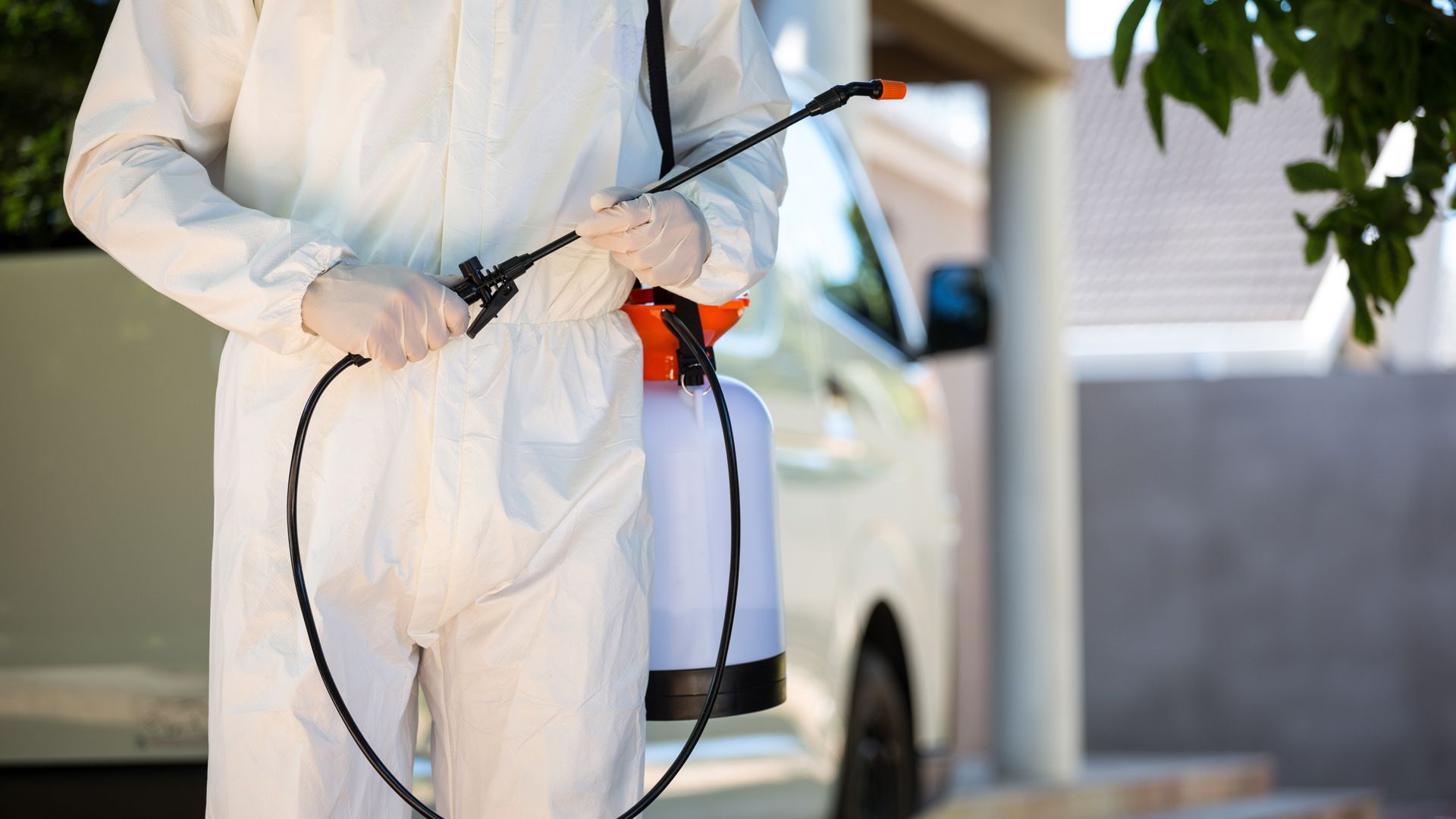
For many Austin homeowners, especially those planning to use their yards heavily in fall, professional mosquito control adds another layer of protection. A typical mosquito service combines two main strategies.
- Targeted barrier treatment to vegetation, shaded areas, and other resting spots where adult mosquitoes hide during the day. This reduces the population in the spaces you use most.
- Identification and treatment of breeding sites such as hidden containers, drainage issues, or ornamental water features that cannot be emptied. Addressing these limits new generations from emerging.
Because Aedes mosquitoes tend to stay close to where they hatch, treating the perimeter and key areas of your yard can make a noticeable difference in your day-to-day comfort, even if neighboring properties are not being treated the same way.
Fall Is Not the Time to Let Your Guard Down
In the Austin area, cooler evenings and football season do not signal the end of mosquito season. They mark the tail of a long May-through-November window where mosquitoes are still breeding, biting, and, in some cases, carrying disease. Our warm spells, fall rains, and humid subtropical climate let mosquito populations rebound quickly between cold fronts, which is why those itchy bites keep showing up at fall gatherings.
Staying consistent with source reduction, personal protection, and, when needed, yard-level treatments through the fall months can make your outdoor spaces far more comfortable and help reduce health risks. If you would like a professional evaluation of mosquito activity around your home and a plan tailored to your property, we are always glad to help at Roberts Termite & Pest Control. You can reach our team at (737) 348-0893 to discuss options or request a free estimate.